
Before the visit
Move eligibility and authorization surprises upstream.
Upcoming appointments can surface coverage that still needs verification and authorizations nearing expiration.
For multidisciplinary clinics with front-desk and billing teams: connect coverage, documentation, charges, payer rules, submission, denials, remittance, and patient responsibility to one visit record.
Published plans: Charts Lite $199 · Charts Core $349 · Charts Plus $499 per month
Each stage has different owners, but the patient, visit, clinical, and payer context should not fragment at every handoff.
Eligibility and authorization attention before the visit
Signed clinical context and reviewed code suggestions
Visit-linked superbill, diagnoses, services, and charges
More than 60 payer rules maintained in an admin editor
837P and clearinghouse response context
Denial review, appeal work, aging, and follow-up
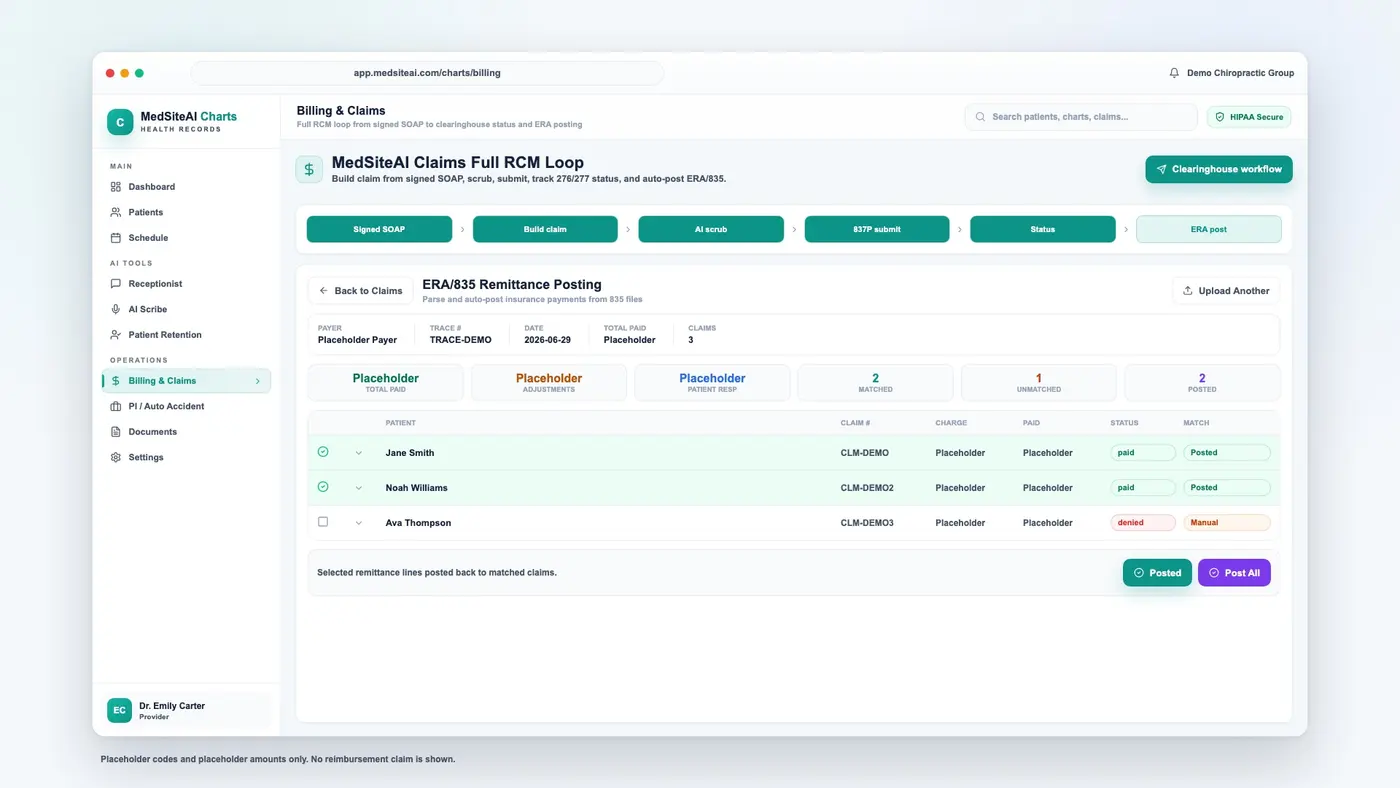
835 remittance, adjustments, and patient responsibility
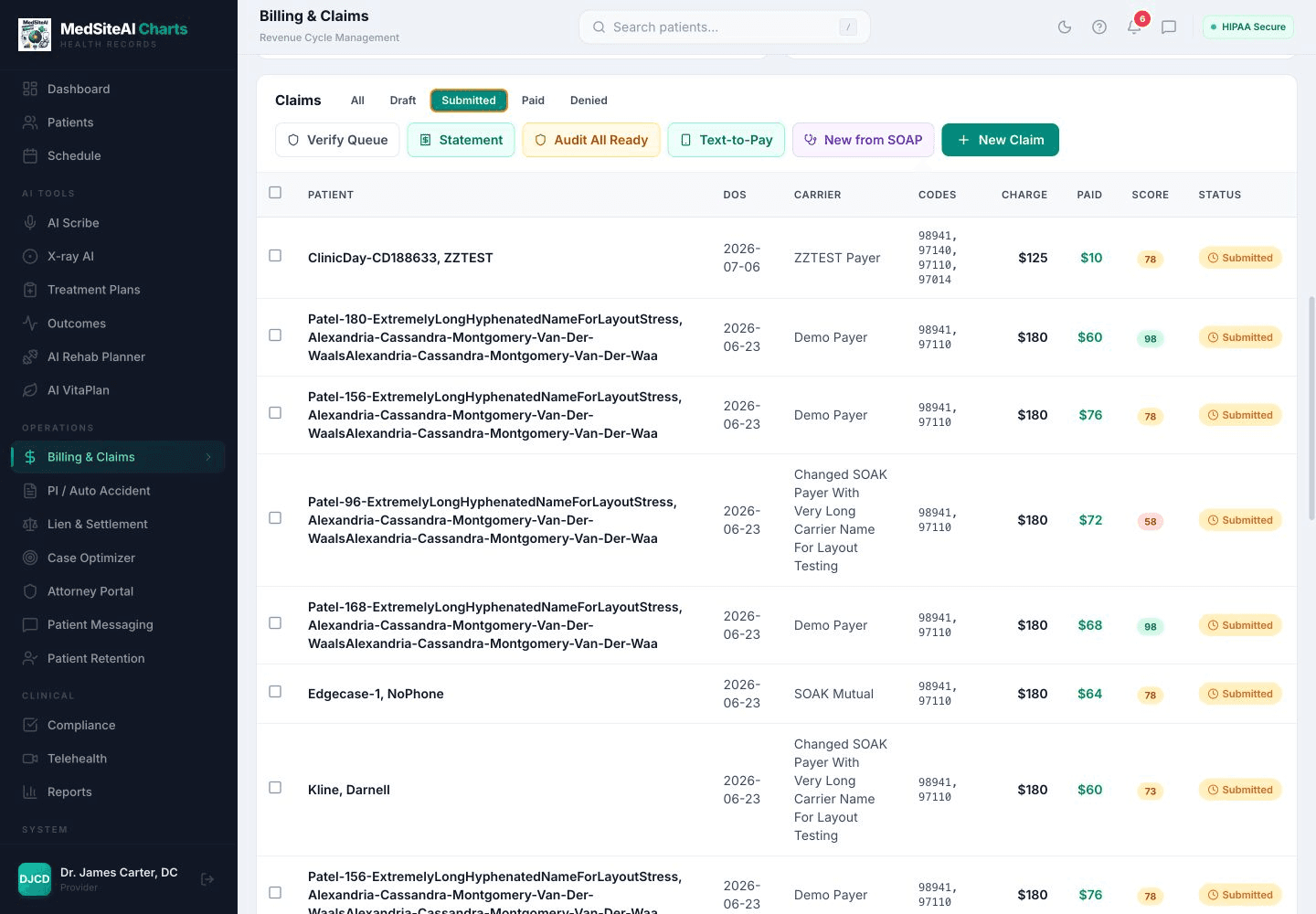
The authorized demo tenant exposes claim stages, attention work, and a denial rules engine in one billing surface. Synthetic records protect patient privacy while preserving the workflow.
Upcoming appointments can surface coverage that still needs verification and authorizations nearing expiration.
Diagnoses, services, patient, provider, and visit information flow into the superbill before the payer-rules pass.
Submission, claim status, response, and 835 remittance context remain visible in the revenue workspace.
Charts includes more than 60 claim rules plus an administrative editor for payer-specific checks. The purpose is to surface preventable problems before submission—not to conceal logic in a vendor black box.
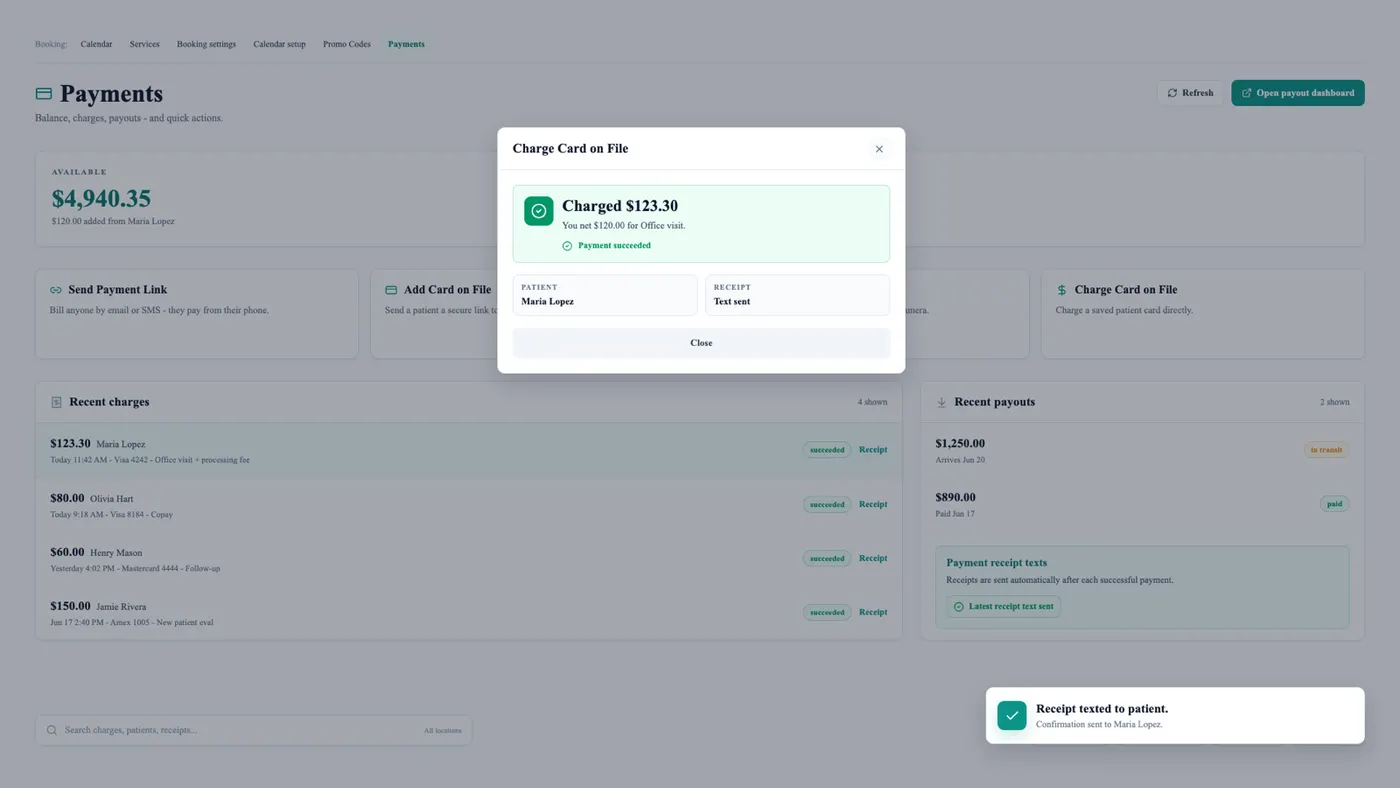
Card on file, payment plans, kiosk collection, receipts, and Text-to-Pay stay attached to the patient balance created after claim and remittance activity.
Case type, lien and settlement status, imaging, narratives, optimization, documents, and attorney-facing records remain connected to the longitudinal clinical chart.
Direct answers about fit, migration, ownership, AI review, and the connected platform.
Yes. The platform connects eligibility, superbills, electronic claims, remittance, denial work, card on file, payment plans, kiosk balances, and Text-to-Pay to the patient and visit context.
Yes. The Charts billing surface includes more than 60 claim rules and an administrative payer-rules editor so billing leaders can maintain pre-submission checks.
Yes. The connected revenue workspace supports denial detection, claim attention, appeal work, and follow-up context alongside the clinical and submission record.
Upcoming visits can surface unverified coverage and expiring authorizations before arrival. The insurance context stays connected to the appointment, patient, charges, and claim.
Yes. Personal-injury and auto-accident workflows include case, lien, settlement, documentation, optimization, and attorney-facing context connected to the clinical chart.
No. Charts supports preparation, rules, submission visibility, denial work, and follow-up. Payer decisions, coverage, documentation, coding, and reimbursement remain subject to the applicable patient, provider, and payer context.
We’ll trace where documentation, payer rules, submission response, appeal work, and patient responsibility stay connected.